When the apostle Peter delivered his sermon on Pentecost, he was not the man who had denied Christ three times. His strength came from knowing God had forgiven him, and he had gone to become one of the apostles whom Jesus had used to grow the church.
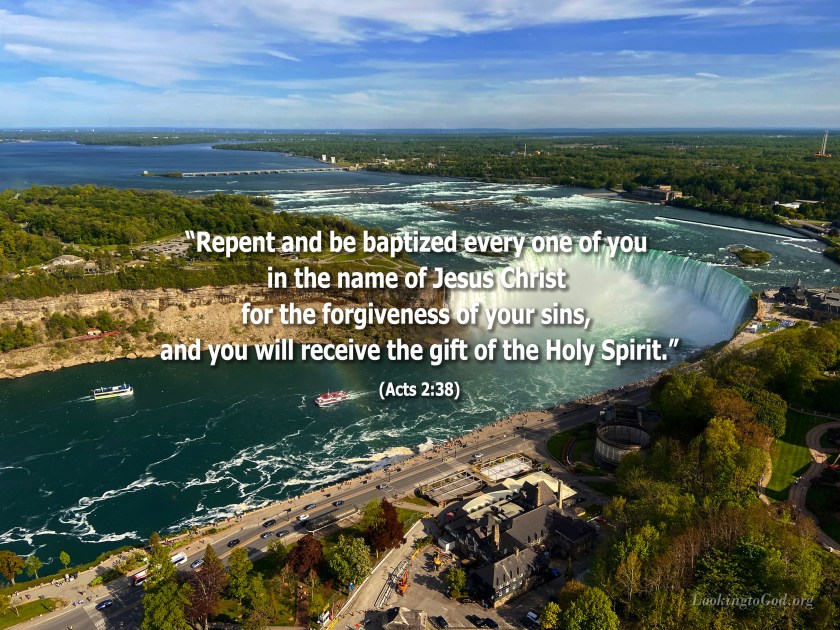
“Now when they heard this they were cut to the heart, and said to Peter and the rest of the apostles, ‘Brothers, what shall we do?’ And Peter said to them, ‘Repent and be baptized every one of you in the name of Jesus Christ for the forgiveness of your sins, and you will receive the gift of the Holy Spirit.’”
(Acts 2:37-38)
After having repented, Peter had received the gift of the Holy Spirit. Jesus promised us also the Helper, the Holy Spirit, whom the Father would send in Jesus’ name and would be with us forever. Through repentance and baptism, we would receive Him.
Repentance is recognizing we have done wrong to God by not obeying Him and asking for forgiveness for those wrongs. By this, we open our hearts to Him and turn away from our sins, doing good always and not wanting to commit the same sins any longer.
Let us therefore look to God for the strength that the apostle Peter had when he stood in front of a crowd of thousands to proclaim Christ. Through God, all things are possible and through Him, we no longer ought to be afraid of the penalty of sin.
Repent and be baptized.


Amen, blessings
A beautiful gift our Heavenly Father gives to us. To forgive us is to love us unconditionally.
Blessings~
Vicki
Nothing changes if we do not change. Repentence acknowledges our faults. Great post, Jack.
This is a deeply encouraging reflection on repentance, forgiveness, transformation, and the strength that comes through faith. What makes it especially meaningful is the choice of Peter as its central example.
Peter’s story is powerful precisely because he was not flawless. He denied Jesus three times, yet his failure did not become the final definition of his life. Your reflection beautifully emphasizes that God’s forgiveness can transform guilt into courage and weakness into purpose.
This is a fascinating and thought-provoking continuation of the Mary Magdalene series. What makes it particularly compelling is that it moves beyond simply discussing a painting and asks a much larger question: Who gets to decide how a woman is remembered?
The title, “When History Gets ‘Clothed’,” is wonderfully chosen. The word “clothed” works on two levels—literally, because Titian’s later Magdalene is covered, and metaphorically, because history itself is often “dressed” according to the values and agendas of those who control its telling.
Amen! This is one of my favorite Bible scriptures. Very relevant. Powerful.