Posted in Monday Mayhem

Zombie Immortality

I get a kick writing about zombies. Unlike their vampire horror counterparts, I find the whole zombie genre fascinating. However, I dare not draw a direct comparison between zombies and vampires, even though at times one would be hard-pressed not doing so. Perhaps one day I can write about the transformation of the vampire genre in our modern age. But not today. Today, I’d like to add to my Monday Mayhem series the immortal nature of zombies.

Infinity
Infinity

When I think of zombies, I think of them as these non-stop, eating machines. In a past post, I’ve compared them to sharks. They hunt and feed. Nothing else. Their makeup is of the design of wanting to fulfill the emptiness felt within. They lurch back and forth, hauling their limbs from one caustic kill to another. Their only enemy being us, humans, who also happen to be their main meal.

Before zombies grew to become these grease-lightening, run-for-your-life, all-consuming creatures, as seen in World War Z, zombie fans only had George A. Romero’s biblical-like telling of how zombies should behave.

They had to drag. They had to moan. And they had to appear as if a truck ran over them. Several times, in fact. Their head tilted to one side became their trademark.

Yet, in all this, what does it mean? Every so often, I’ll add my two cents to the zombie coffers in an attempt to demystify the legends from fact. I’ll give an opinion regarding zombie origins, diseases, curses, events, possible apocalypse scenarios, and the like. I’ll delve into the science behind today’s zombie blitzkrieg, the whys and wherefores. The question remains though, what does it all mean?

If you will, allow me a few moments to lend you my take of what zombies represent in our culture. I’ve been thinking about this for a while and I believe my opinion is ready for some good ol’ fashioned primetime critique.

Dust
Dust

I believe zombies represent humanity’s desire to capture the idea of wanting to live forever. This is not a new concept in the zombie genre. It’s been around a long time in the vampire realm, but for zombies, no one really talks about it. Who wants to? Do you want to see a zombie live forever? Uh-uh, not me. Not in my backyard. But, the implication is there. Zombies and humans have a limited shelf life. Both eventually will die and return to dust.

You might ask how can I know this? Look around. We have spas for rejuvenating vitality, convincing ourselves we can reverse the process of aging. Oils and lotions to keep our faces from losing collagen, so our skin won’t sag to our chest in our retirement years. We run, swim, bike, walk in hopes we can keep the heart pumping to an optimal level in order to avoid a massive coronary or fatal aneurysm. Our commercials tell us we’ll lose twenty pounds from our figure if we consume their products. It’ll make us look young and we’d be able to attract those much younger than us of the opposite sex. How young do we need to regress? Will we be satisfied if we have a magic cure-all to find ourselves back in our mother’s womb?

It’s a craving we have for youth similar to a zombie’s craving for human flesh. In a zombie’s case, no matter how much meat it eats, it will continue to rot until it dies a miserable death. Not much different from humans, really. We can shoot a man to the moon and back but we can’t find a cure for aging.

RANGER MARTIN AND THE ZOMBIE APOCALYPSE, on sale October 22.

Do you think zombies represent humanity’s plight against getting old? Can you think of anything else zombies might represent?
Posted in Monday Mayhem

Zombies, Vampires and the Economy

Jack Flacco is proud to announce RANGER MARTIN AND THE ZOMBIE APOCALYPSE, the first book in the Ranger Martin series, will publish on October 22.

An economic theory of sorts caught my attention the other day I thought I’d share. The theory goes something like this: when the economy does well, zombies rule. When the economy flounders, vampires seize the reigns. What better way to add to my Monday Mayhem series than to introduce a discussion of money, zombies and vampires?

Pontypool
Pontypool

It started with an article I came across on one of these financial sites, on my way to explore for another post I was working on. Funny how these things work. Whenever I’m looking for something to supplement a current post, something else hits me square between the eyes to prevent me from completing my research. Nonetheless, I can see how the theory came to be.

I’m writing this as is, without much commentary. I’ll provide the examples (including movie posters) more as a guide, but you can draw your own conclusions. Suffice it to say, some daring economists have already written about this before, plotting the rise and fall of zombies and vampires against fluctuations in the Dow Jones Industrial average.

Here’s my take on the theory…

Zombies, by nature, consume anything and everything. They have no sense of self-restraint. If they see something consumable, they will eat it. Nothing in their path is safe. Every so often, they lay dormant, waiting for their next big feast. As sharks frenzy, so do zombies when they spot a sure thing. Whatever obstacle may block their path, they quickly dismantle. In large groups, zombies are unstoppable.

Warm Bodies
Warm Bodies

So is the zombie economic model. During a recovery, consumers freely purchase having no self-restraint. A new bike? Buy it. A new car. Buy it. A new house? Yep—buy it! Everything catches their eye as fair game. There may be lulls where they seem to have satisfied their cravings, but they’re waiting for the euphoria to catch again. And if it’s Black Friday or Bargain Tuesdays at the local electronics shop, look out. Nothing will stand in their way to get to that big screen TV. In groups, consumers can ravage a store in seconds.

Vampires, on the other hand, are subtle hunters, choosing deception as their ally. They crave blood. When they satisfy their craving, they recede into the shadows. The strong and weak is no match for their cunning. Patience is part of their nature. Once they spot a target, they will stalk it until the time is right for the kill. They appear as human but their innards make them soulless creatures.

Twilight
Twilight

And so is the vampire economy. When times are tough, consumers are a guilt-ridden, crafty lot, choosing to talk their way into a deal. They take a tally of how well they’re doing by how well they’re saving. Sticker price means nothing to them. If it says $10, they’ll negotiate for $9 hoping to get it for $9.50. Large companies, small shops, makes no difference. They’ll wait. A deal is bound to come their way. When they see it, they’ll move in for the kill. If someone else spots it, they’ll push their way to get there first. Even if it means spilling blood.

Supplemental Reading Material

Have you ever heard of this theory? What is it that makes it unique among other zombie theories?

Posted in Monday Mayhem

Zombies: The New Vampires

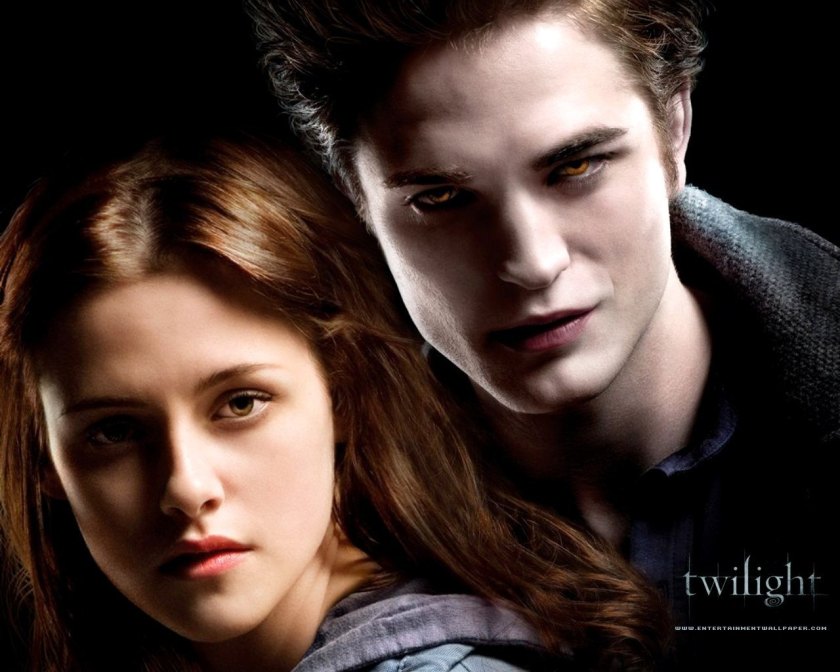
It wasn’t long ago when audiences packed theaters for vampire-themed movies. Much of that popularity came from young readers devouring books like Twilight. How quickly trends change. With the new release of the film World War Z this summer, zombies will all but secure the top spot as the new vampires.

Don't Open, Dead Inside
Don’t Open, Dead Inside

How did this happen? For this edition of Monday Mayhem, my series devoted to all things crazy and insane, I’d like to explore the rise of the zombie from a knuckle-dragging goon to a sophisticated eating machine.

Disclaimer: If anything my regular readers know about me is, I’m a zombie purist. I’m a huge fan of George A. Romero, the father of modern zombie behavioral science. Have that in mind when reading this post, since I’ll probably offer my opinion on more than one occasion—or not.

At one time, vampires ruled the earth. Bookstore shelves couldn’t keep up with the insatiable demand to carry the latest and greatest vampire series. Every Halloween the most popular costumes had to have fangs and pale white makeup kits. Theaters featured vampires making dinner meat out of humans, vampires killing werewolves, and vampires falling in love. Topics on radio shows included: Whenever you hear thunder, do you wonder if vampires are playing baseball?

What happened to the vampire?

by Baby Doll
Zombie at the Door

Zombies are what happened to vampires. Just like their genetic makeup, zombies crept into mainstream popularity and are now eating away at every form of media. The movie Warm Bodies is the latest entry to the genre, which film critics loved as the zombie equivalent to Twilight. The steady growth of zombie fandom hasn’t relented one bit either. Shows like The Walking Dead and In the Flesh have captured the imagination of viewers everywhere. Sites devoted to the undead have sprung up throughout the world. Commercials have even gotten in on the act. Zombies apparently love BMW, Ford and Doritos.

How did this all happen?

In the 1920s, H. P. Lovecraft wrote a short story called Herbert West—Reanimator. Inspired by Frankenstein, Lovecraft’s mad doctor believed he could bring life back from the dead, which he did. The caveat being the creatures reanimated came back as starved cannibals, killing and eating everyone in sight. Sounds familiar, huh?

In 1954, Richard Matheson wrote I Am Legend. Although devoted to vampirism, the common story elements with modern day zombies are evident. A virus infects humans who then infect other humans with their bites. In the 2007 movie by the same name, Will Smith fights dark seekers, which blurs the lines between vampires and zombies even further. Although never spoken of as vampires, if one were to view dark seekers simply by their behavior, one would think they are zombies (feed off humans, affected by a virus, etc.).

However, it wasn’t until 1968 when director George A. Romero released The Night of the Living Dead that zombies became what they are today—single-minded eating machines. These are the same zombies featured in the show The Walking Dead (born from the dead, crave human flesh and will die with a blow to the head—as I’d written in my post The Three Commandments).

This gradual escalation of zombie popularity has yet to abate. Once we see a full-scale acceptance of the zombie genre, that’s when a true zombie apocalypse will have taken place.

Have we seen the last of vampires? Do you think someone will write about a family of zombies?

Posted in Monday Mayhem

The Three Commandments

In recent times, moviegoers have come to realize there are no absolutes when dealing with the horror genre. Ghosts can eat food (Pirates of the Caribbean), werewolves can change at will (Underworld), and vampires can sparkle when exposed to sunlight (Twilight). However, all bets are off when we talk about zombies. Zombies live in a world of absolutes.

Zombie Hand
Zombie Hand

As a primer to my Monday Mayhem series, let’s examine The Three Commandments of the undead. Established by director George A. Romero in the 1968 movie Night of the Living Dead and solidified in his 1978 film Dawn of the Dead, these three laws are what make the zombie genre unique. Without them, zombies wouldn’t exist in their present form.

I—The Dead Have Come Back to Life

A zombie isn’t a zombie unless it comes back from the dead. Much like vampires, zombies were once dead. Hence the name: undead. Through a biochemical change, voodoo or some other form of reanimation, the dead rises. This is the crux of zombiehood. Without it, zombies simply are not zombies.

What about a virus? In modern storytelling, a virus is the usual suspect in the blame-game for many undead creations. Typically, the virus runs through a population, changing them to become zombies. In strict technical terms, these creatures may not qualify as true zombies if the victims do not initially die. However, I argue if a virus has an element of death associate with it (biological or intellectual), then of course the resultant creature is none other than a zombie.

The key here is to note a physical transformation from death to life.

II—The Undead Crave Human Flesh

Every biological species requires sustenance to maintain health. Zombies do not. Zombies eat because it’s in their nature to hunger after human meat. It’s a compulsion. They cannot turn off the desire to slay a human and feed off the body. They just can’t. They are like the sharks of the underworld. They yearn, hunt, kill and eat. That’s it. They don’t stop. From one body to another, they’ll consume a whole town without regard. They are never satiated.

The Frontal Lobe
The Frontal Lobe

III—The Undead Will Die with a Blow to the Brain

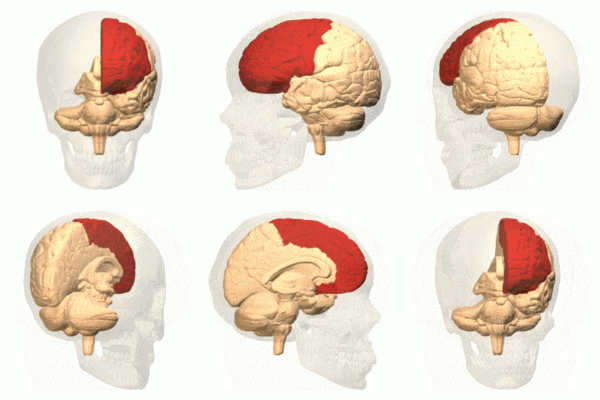
The only thing that will stop a zombie is the destruction of its brain. A hunter of the undead can use various methods to attain this result. The most common is a bullet to the head. A knife through the temple will also do a fine job of ridding the earth of the vermin species. As would any of these other methods: An ice pick through the eye socket, multiple blows from a baseball bat, a sharp stick through its mouth thereby severing its spinal cord, a screwdriver to the back of the skull, a meat cleaver aimed directly at the frontal lobe, etc. The possibilities are endless. The purpose is to render the creature dead by inflicting the maximum amount of trauma to its brain. Once complete, the zombie will no longer pose a threat to any other humans.

Have you ever heard of The Three Commandments? What are your thoughts about zombiehood?

Posted in Women Who Wow Wednesday

Selene

What better way to kick off today’s Women Who Wow Wednesday post than with a kick ass, female Death Dealer.

Underworld's Selene
Underworld’s Selene

I like vampires. Well, I like vampire movies, not vampires per se. Otherwise that would make me weird. Then again, I do love zombies, so that makes me weird enough. But I like a good vampire movie. And I love werewolf movies too. Just not as much as zombie movies. So when Underworld came out a few years ago, I showered, shaved, and ran to the theater hoping to catch it opening night. How can a fan of both vampires and werewolves miss this gem?

That’s when I saw her for the first time. She stood perched on a building ledge, high above the torrential downpour, analyzing the street below. Looking. Wanting. Waiting. She leapt. Gliding a hundred feet to the bottom, she landed to a bounce. She struts her way through the crowd, hunting.

Played by the gorgeous Kate Beckinsale, Selene’s mission is to destroy Lycans, a species of werewolf that, unlike ordinary werewolves, can control their transformation. Selene is a vampire and can endure daylight. Old school vampires like the ones in Anne Rice’s Interview with the Vampire, burn in the daylight. Other vampires, dare I say it—sparkle. Shivers. Selene doesn’t have to worry about spontaneously combusting, leaving behind nothing except a big pile of ash. She has immunity to UV light. She can blend in like one of us. However, I’m not sure just how much she can blend in with all that leather she wears and her attractive features. It would be like a lion blending in with a flock of lambs.

Selene is also proficient in all manner of weaponry and possesses other abilities such as speed, strength and endurance. In one instance, a group of police officers had her cornered in a hallway with no escape, wearing their full compliment of armor. No problem. Equipped with only a scalpel, she blasted past the officers spilling their blood and leaving their corpses to rot. In another instance, she plows her hand right through a Lycan as if it were some sort of fruit.

In all this, what makes Selene special, though, is her gentle side. It’s the side only Michael, a human, sees.

The Beautiful Selene

As terrifying and vicious as she can be, Selene’s love for Michael makes her vulnerable to getting hurt. She trusts him. She gives of herself fully to him in order to allow their love to grow.

It’s that beautiful, delicate balance between good and evil, light and darkness, love and hate that makes Selene addictive. She represents the unattainable, defending her species at all cost.

Have you seen Underworld? Did you like it? What did you find the most interesting aspect of the film?

Posted in Monday Mayhem

Zombies, Zombies, Zombies!

Welcome back to Monday Mayhem. If you haven’t read my intro to the series, you can search for it on my site with the keywords Monday Mayhem or you can click on the Monday Mayhem link at the top of this post. Simple, huh?

Night of the Living Dead

Now that the Mayan silliness—ahem—apocalypse is out of the way, let’s talk about something worth talking about: Zooooooombies. Yep, those green critters everyone loves to run away from whenever a biological disaster hits. Zombies. Specifically, let’s talk about what they look like, ‘cause a number of films have interpreted their own versions of the grotesque creatures.

Since I wrote about I Am Legend last week, I thought I’d start with them. According to tradition, zombies are the walking dead. Some call them the undead. They walk back and forth on the earth seeking of whom they may devour. They have a “drag” to their pace. Like this: Step-drag, step-drag-drag, step-drag. Okay, I made that up. Yes, they walk slow. In the movie I Am Legend however, they are speed freaks. They run fast, hit hard and eat with intensity. Some have said they really aren’t zombies at all but vampires, due to their sensitivity to light and their penchant for going for the jugular.

Vampire Extraordinaire, Underworld's Kate Beckinsale
Vampire Extraordinaire, Underworld’s Kate Beckinsale

My thoughts? Vampires turn into vampires when bitten by other vampires. The creatures in this movie become zombies after a medical procedure goes awry (the typical method of zombie propagation).

How about the creatures in other movies? How about the beasts in 28 Days Later, Resident Evil and Dawn of the Dead? Oh, and the TV show The Walking Dead? Well, those are your standard, cookie-cutter zombies. Their flesh hangs off their bones, eyes white, and they possess the trademark drag. Those creatures also maintain their pleasant countenance by walking around with torn, often shredded clothes. Of course, let’s not forget the scabs. They sport various scabs throughout their bodies as a testament to their zombiehood.

Fighting Zombies
Fighting Zombies

You really don’t want me to describe scabs in detail, do you?

Then you have your funny zombies. The zombies you find in Shaun of the Dead for instance. These monsters border on stupidity. Most of the time, they stand around while their food—human—disappears. In one scene, Shaun acts as a tour guide/director giving the hoard directions to follow him, since he is good to eat, all the while helping his friends escape.

And how can we forget Zombieland? Bill Murray plays one of the undead. I’m not getting into the specifics with this movie. It is one of my favorite and it would be a shame if I spoil it for anyone who hasn’t seen it. Suffice it to say: Watch it.

The Crazies
The Crazies

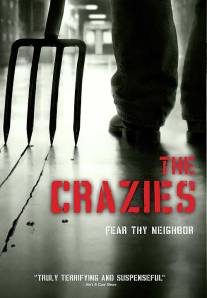
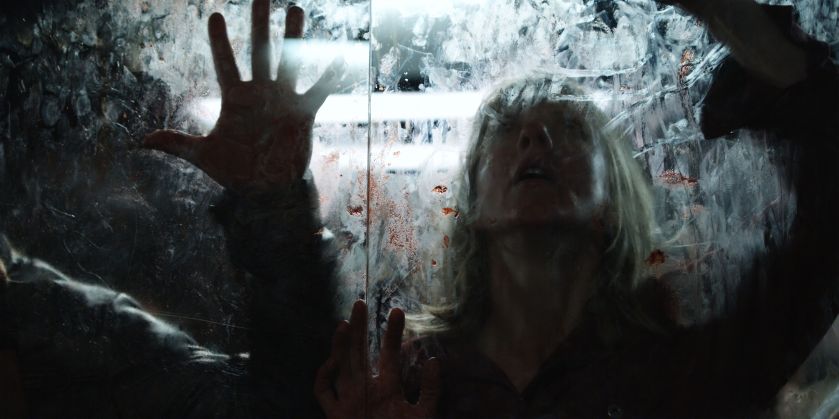
The last movie I’d like to mention, which may seem odd to describe as a zombie movie, is The Crazies. The beings in this film harbor a mysterious element to their personalities that propels them to behave irrationally. Some critics may not consider them typical zombies in the strictest sense, given they don’t eat flesh, talk, and are not dead. But when faced with one of these blank staring individuals, I assure you, they function as true blood zombies. These are the most interesting of the species. No one knows who they are and the survivors travel with suspicion.

There you have it, a description of the most popular zombies to walk the planet in search of human delicacies.

Did I forget any of them? Have you seen any movie I missed describing the type of zombie? If you have, go ahead and comment. I’m interested in what you have to say.